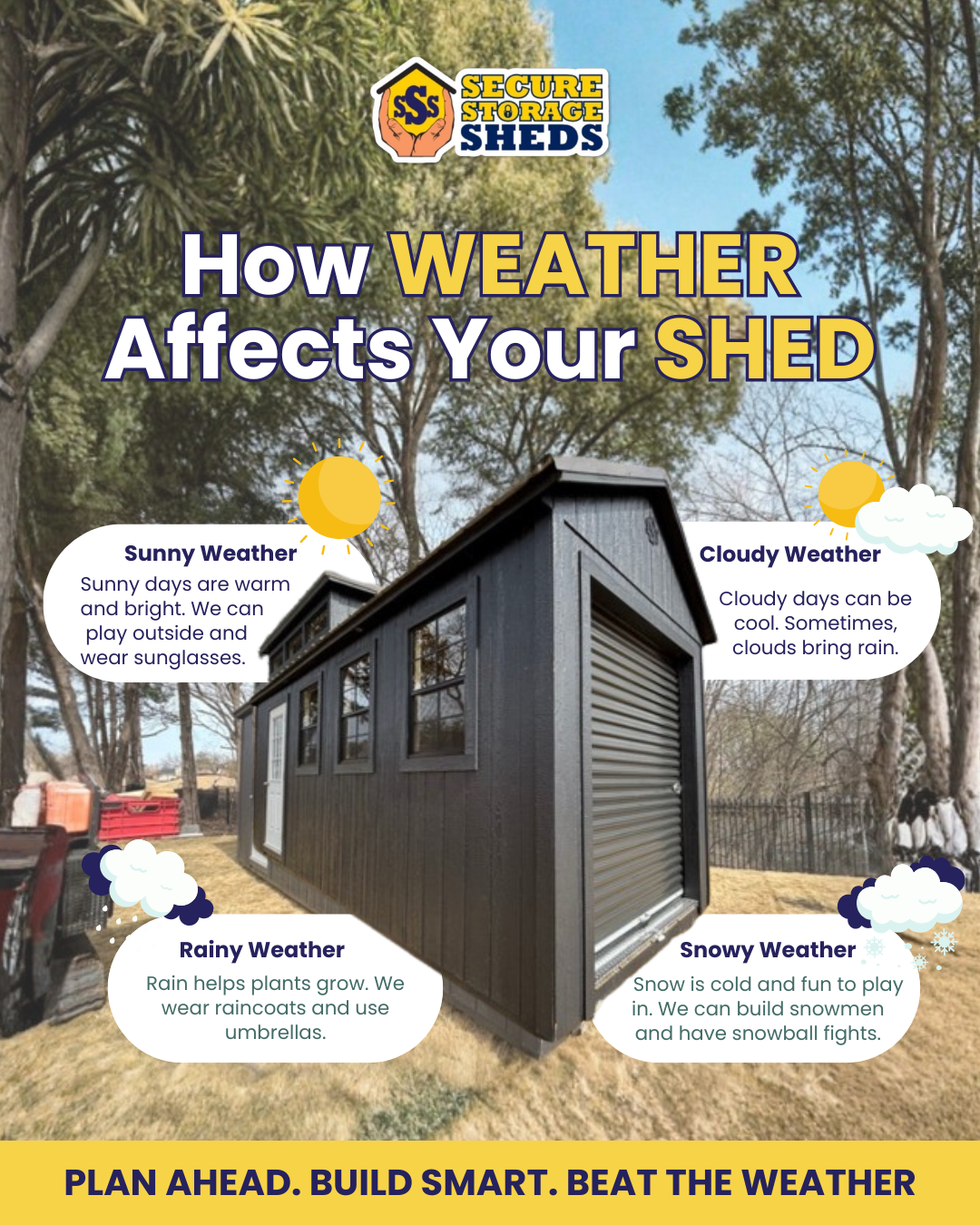
Learn how heat, rain, wind, and temperature changes affect your shed—and how proper construction helps protect it for years.
When investing in a storage shed, most people focus on design, size, and price. However, one of the most important factors that impacts your shed’s lifespan is weather exposure.
Your shed is constantly exposed to sun, rain, wind, and changing temperatures. Over time, these elements can affect its structure, appearance, and durability. Understanding how weather impacts your shed can help you make smarter decisions and maintain it properly.
Heat and Sun Exposure
Extended exposure to sunlight and high temperatures can cause gradual damage to your shed.
UV rays can fade paint and finishes, while heat can cause materials like wood and plastic to expand and dry out. Over time, this may lead to:
Cracking
Warping
Discoloration
Using treated materials and protective coatings can help reduce the impact of sun exposure.
Rain and Moisture Damage
Moisture is one of the biggest threats to any outdoor structure.
Rainwater and humidity can penetrate small openings, especially if the shed is not properly sealed. This can result in:
Wood rot
Mold and mildew growth
Rust on metal components
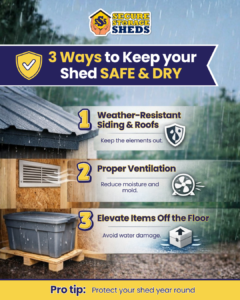
Proper sealing, roofing, and ventilation are essential to keep moisture out and maintain the integrity of your shed.
Wind and Structural Stress
Strong winds can put significant pressure on your shed, especially during storms.
Poorly built or unsecured sheds may experience:
Loose panels
Roof damage
Structural shifting
A well-constructed shed with strong framing and proper anchoring can better withstand windy conditions and prevent long-term damage.
Temperature Fluctuations
Daily and seasonal temperature changes cause materials to expand and contract repeatedly.
This constant movement can weaken your shed over time, leading to:
Loose joints
Small cracks
Material fatigue
Although gradual, this type of wear can significantly reduce your shed’s lifespan if not accounted for in its construction.
How to Protect Your Shed from Weather
While you can’t control the weather, you can take steps to protect your shed:
Choose high-quality, treated materials
Ensure proper sealing and waterproofing
Invest in strong roofing and framing
Allow for ventilation to reduce moisture buildup
Secure your shed properly to handle wind
Final Thoughts
Weather plays a major role in how long your shed lasts. From intense heat to heavy rain and strong winds, every condition contributes to wear and tear over time.
A well-built shed isn’t just about looks—it’s about durability, protection, and long-term performance.
By understanding how weather affects your shed, you can make better decisions and ensure it stays strong and reliable for years to come.